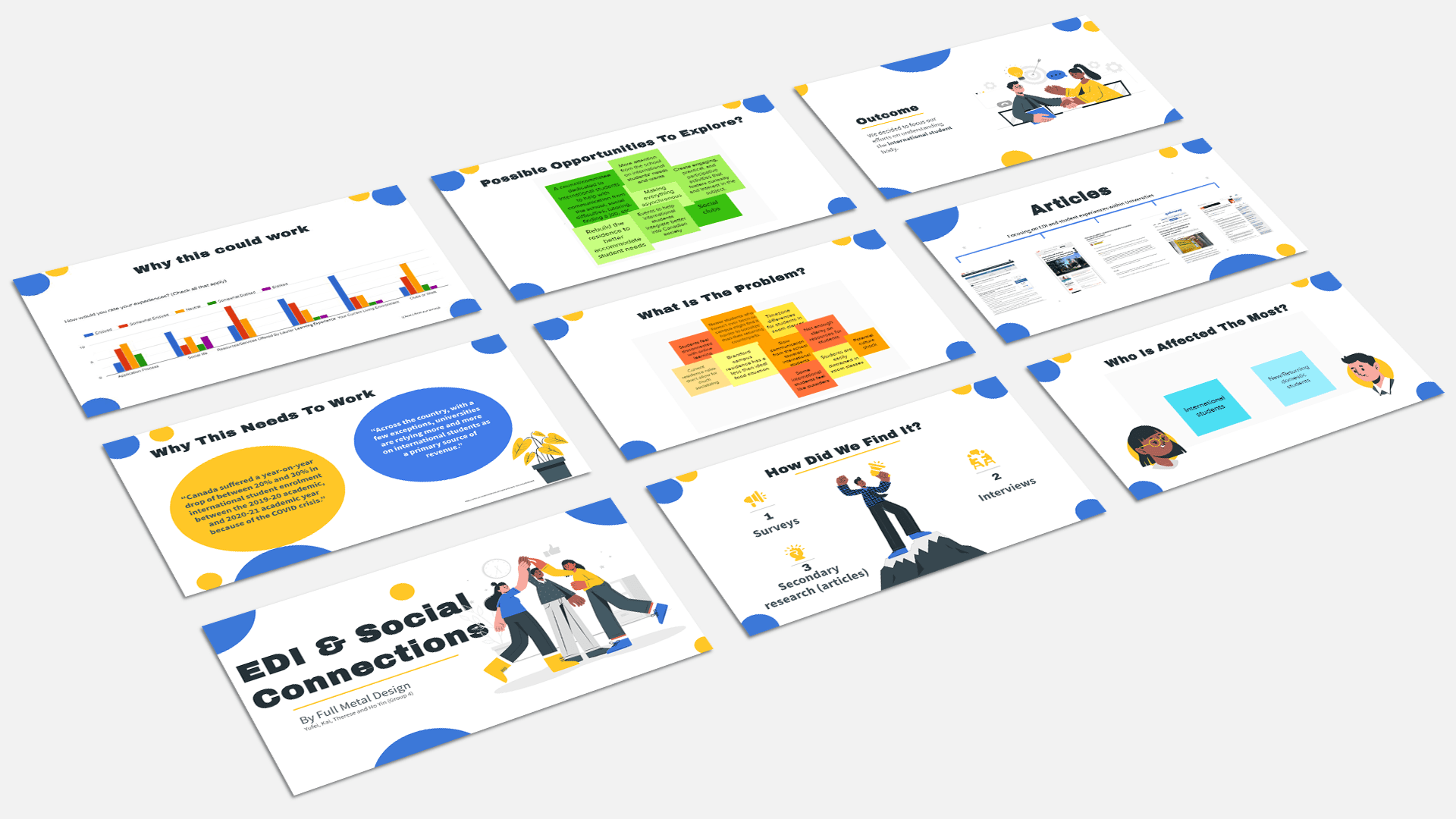
edi on campus
Research
Mental Health
Higher Education
A competitive response to a university challenge to identify critical EDI failures and bolster student success, backed by a $1000 grand prize. We focused our UX research on international students, using surveys, interviews, and secondary research to define the core problems: social isolation and systemic information breakdown. Our solution delivered actionable opportunities, including creating dedicated support committees and enhancing social integration events, to address the lack of reliable communication and create a more connected campus experience.
year
2022
Role
Researcher
Timeline
1 Month
tools used
Figma
Google Forms
Mural
Overview
Problem
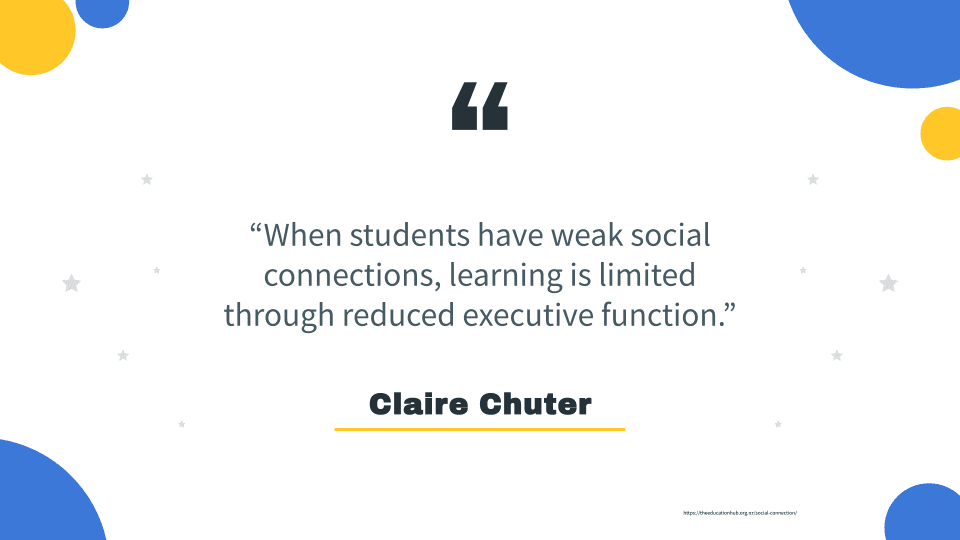
Our project was initiated by the university as a challenge to identify critical areas where Wilfrid Laurier was failing to meet its EDI (Equity, Diversity, and Inclusion) goals. This was for our Design Thinking 1 class, so our prof wanted us to apply the concepts we learned without giving us too much direction in the hopes of letting us creatively tackle an issue of our choosing.
Solution
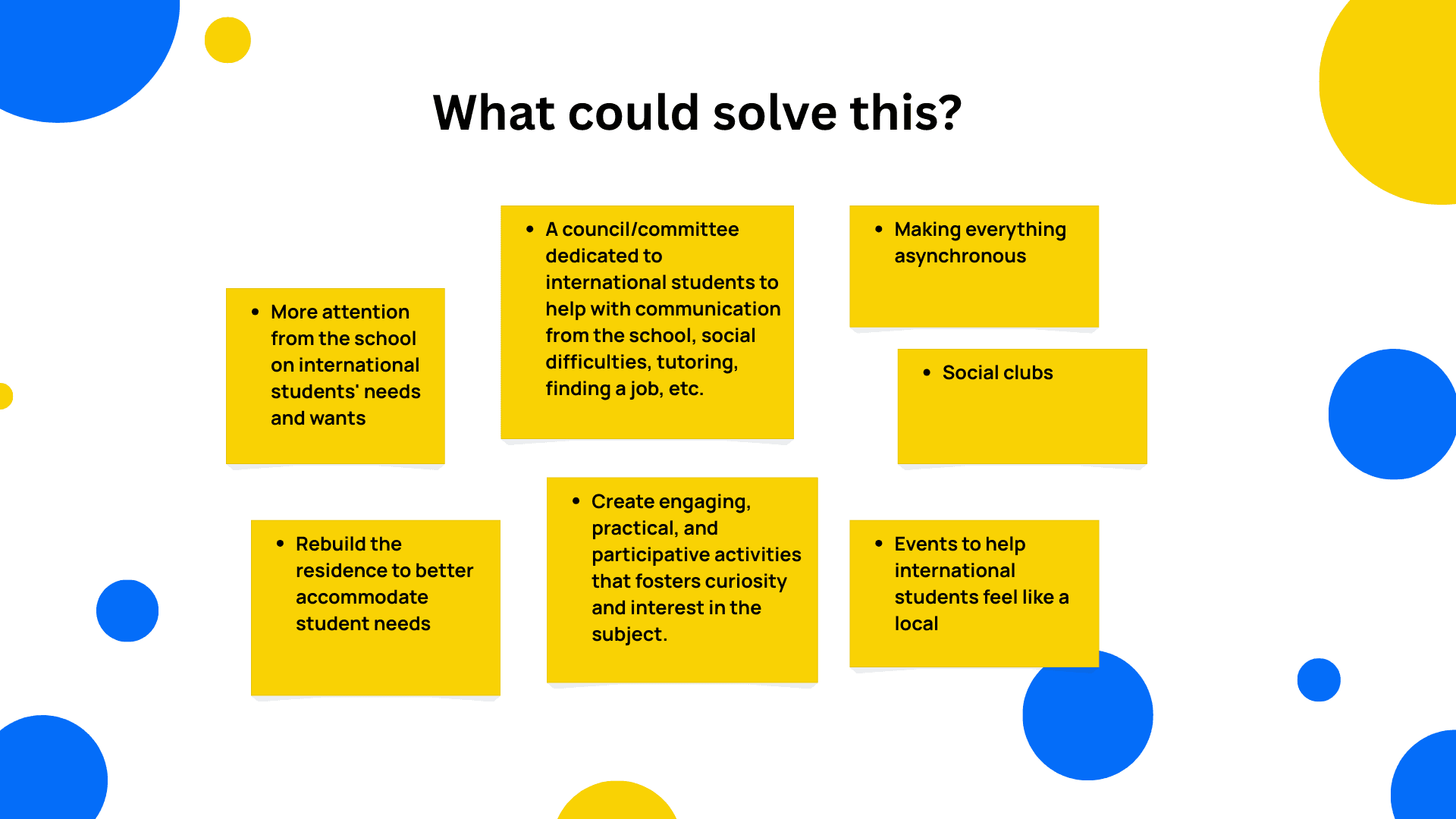
We proposed a multi-layered support framework that involved a specialized student council and implementing participative community programming specifically for the international student population on campus. The aim is to reduce the social and informational barriers that lead to isolation, ultimately improving life for our target demographic.
Process
Research & Discovery
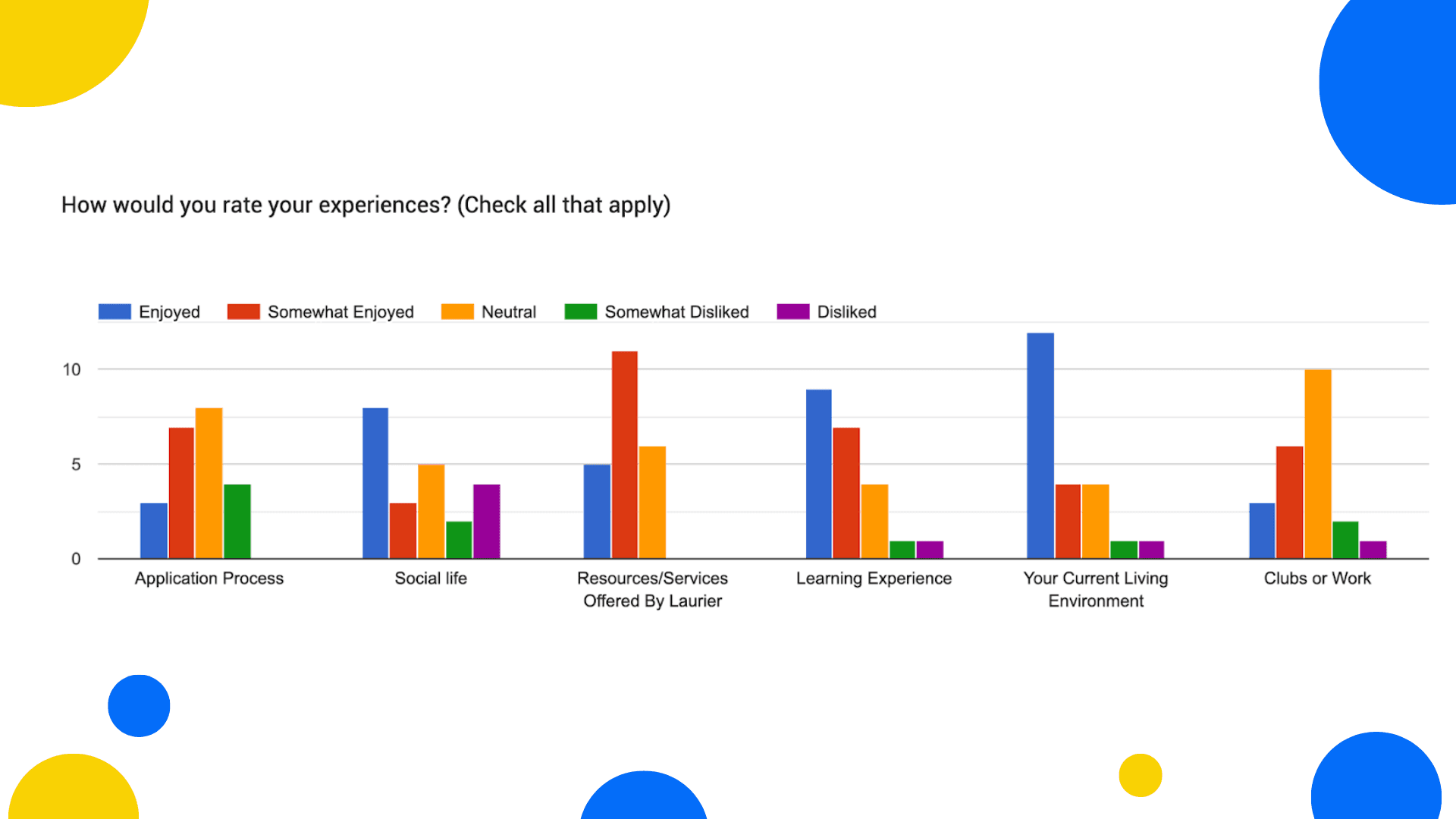
I created a survey for us to measure student satisfaction at our school. The findings highlighted a significant gap in our fellow student's experience; while the "Learning Experience" was generally positive, categories such as "Social Life" and "Clubs or Work" showed high levels of neutrality and dissatisfaction. Notably, the "Application Process" and "Resources/Services Offered By Laurier" received the most "Somewhat Disliked" responses, suggesting that administrative hurdles are a primary pain point for the student body.
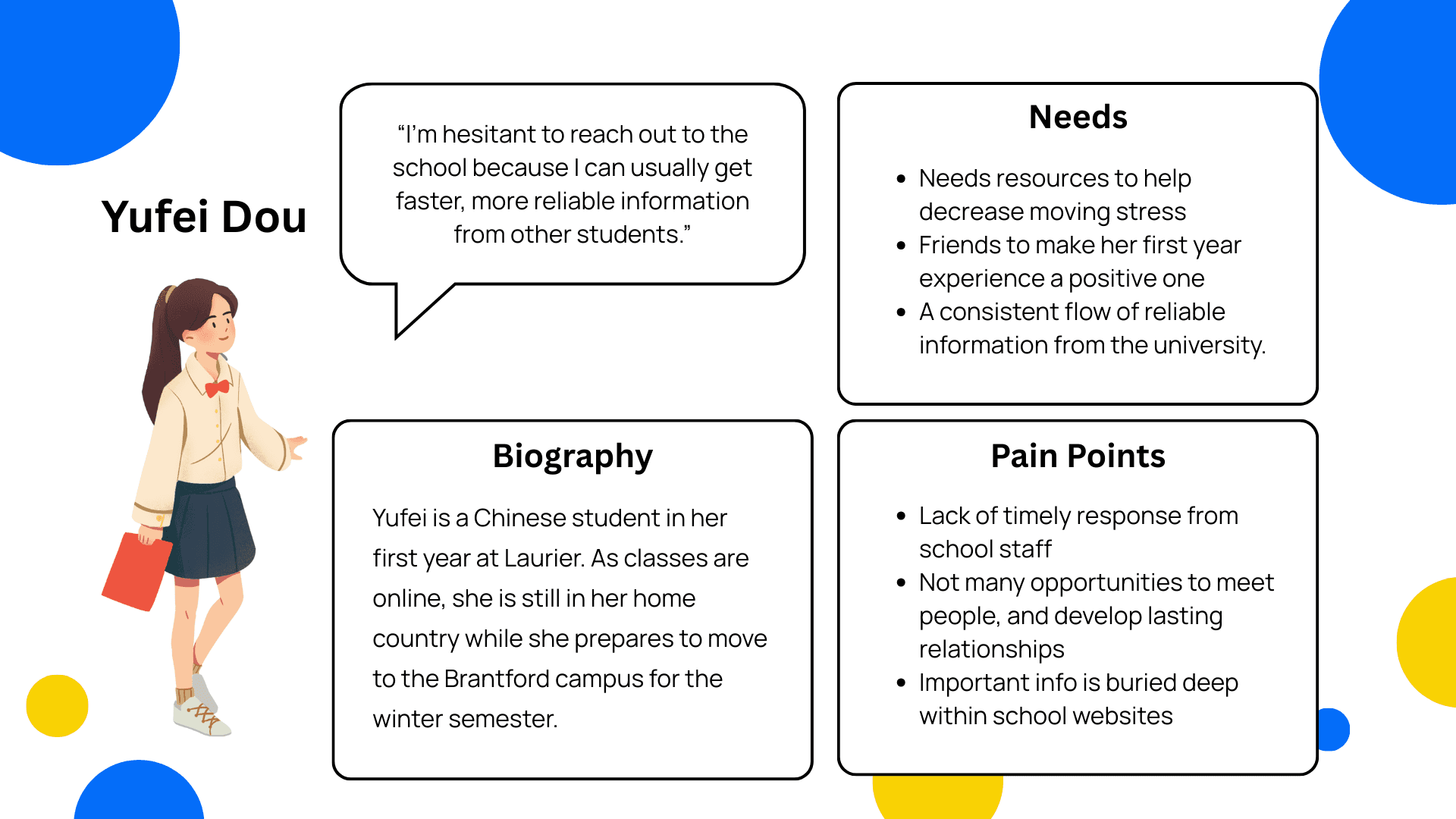
To humanize the data, we performed three deep-dive interviews and analyzed three secondary research articles. This led to the development of our primary persona, Yufei Dou, a first-year international student. Her journey revealed critical frustrations, including a lack of timely communication from staff and essential resources being "buried deep within websites," which directly impedes a "stress-free" transition to campus life.
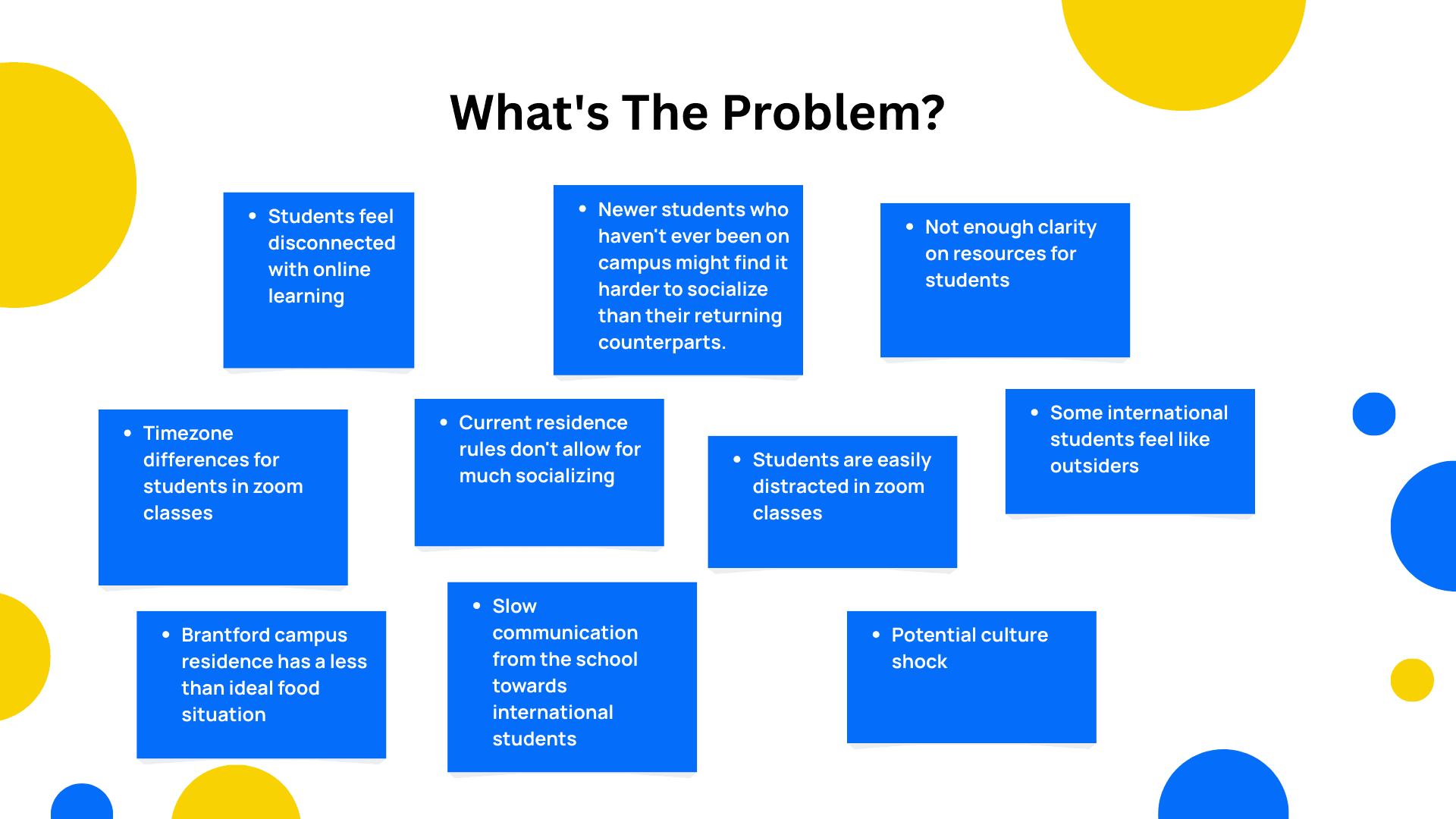
We utilized a mind map to categorize student challenges into core themes, and sticky notes to organize problems and possible solutions. By synthesizing everything we gathered, we identified many issues that the school could resolve that would improve student engagement and welfare.
Solution

The finish line
Coming up to the end of our semester, we compiled all of our information into a deck (that you can take a look in the above image link) that we were tasked with presenting to a panel of judges made up of administrative staff at the university. I represented our group and presented our process and findings, ultimately helping us earn the 1st place $250 each award.